
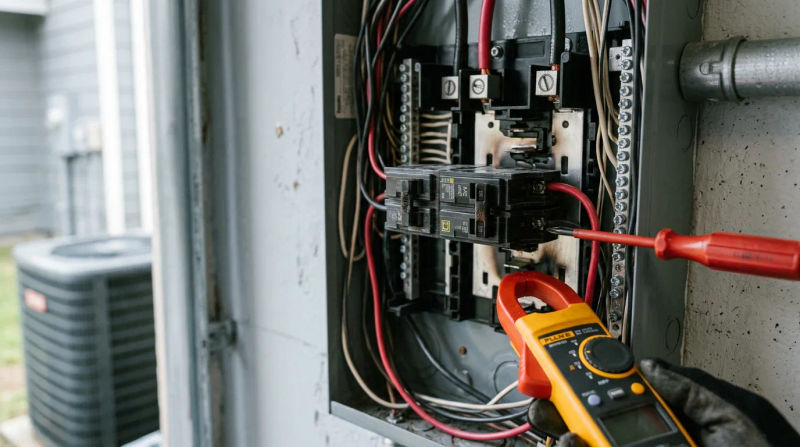
It’s a familiar scenario for many Houston homeowners, especially as September’s heat lingers. You’re relaxing indoors, grateful for the escape from the humidity, when suddenly - click. The reassuring hum of the air conditioner cuts out, and the house falls silent. A quick trip to the electrical panel confirms your suspicion: the AC breaker has tripped again. While a tripped breaker is a minor annoyance, it’s also a critical safety warning. Your electrical system is telling you that something is wrong, and ignoring it can lead to more significant damage or even a fire hazard.
As a technician with over a decade of field experience, I've seen firsthand how Houston's long and demanding cooling season puts immense stress on HVAC systems. From older homes with aging wiring to modern coastal properties, no home is immune to electrical issues. Understanding the potential causes can help you determine your next steps.
Common Signs and Symptoms
An AC breaker tripping is the most obvious sign, but other symptoms can provide clues about the underlying problem. Pay attention to the specifics of when and how the trip occurs. Our technicians are trained to look for these patterns during a diagnostic visit.
- Immediate Trip at Startup: If the AC trips breaker at startup, the moment the compressor tries to kick on, it often points to a problem with a component drawing a massive surge of power right away.
- Delayed Trip: Does the breaker trip after the AC has been running for 15 minutes or more? This suggests a different issue, likely related to overheating or a component failing under a sustained load.
- The Main Breaker Trips: If the main breaker keeps tripping, shutting off power to your entire home, you are dealing with a much more serious electrical overload or a short circuit. This situation requires immediate attention from a qualified professional.
- Buzzing or Humming Noises: Any unusual sounds coming from your breaker panel are a major red flag. This can indicate a loose connection or a failing breaker arcing internally.
- Visible Signs of Damage: Look for any discoloration, scorching, or melting on or around the breaker or the panel itself. A burning smell is another urgent warning sign.
- Flickering Lights: If your lights dim or flicker significantly when the AC turns on, it could signal that the circuit is struggling to handle the electrical load, even if it doesn't trip the breaker every time.
What Causes This Problem
A circuit breaker is designed to protect your home's wiring by shutting off power when it detects an overload or a short circuit. When it trips, it’s doing its job. Here are the most common culprits our teams find on service calls.
- Dirty or Clogged Air Filter: This is the simplest problem to fix and one of the most common. A dirty filter restricts airflow across the indoor evaporator coil. This forces the system's blower motor and compressor to work much harder to cool your home, drawing more amperage than the circuit is designed for, eventually leading to a trip.
- Dirty Condenser Coils: The outdoor unit, or condenser, is responsible for releasing heat from your home. If its coils are caked with dirt, grass clippings, or cottonwood fluff, it can't dissipate heat effectively. The compressor overheats, its internal pressure rises, and it draws excessive current until the breaker trips to prevent damage.
- Failing Start Capacitor: This is a primary suspect when an AC trips breaker at startup. The capacitor provides a high-voltage jolt to get the compressor motor spinning. When it fails, the motor struggles to start, drawing a huge amount of locked-rotor amps (LRA) for too long, causing an instant overload.
- Compressor Issues: The compressor is the heart of your AC system. Over time, its internal windings can wear out and short to ground, or the motor itself can begin to seize. Both conditions will cause the unit to draw far more power than normal, tripping the breaker. This is often the most expensive component to replace.
- A Weak or Faulty Circuit Breaker: Breakers don't last forever. The intense Houston heat and near-constant use during our long summers can cause them to weaken over time. A worn-out breaker may start tripping at an amperage level below its rating, creating nuisance trips. This is a serious safety issue, as the breaker is no longer providing reliable protection. A Houston electrician for breaker issues can test and replace it.
- Damaged or Loose Electrical Wiring: High humidity, vibrations, and thermal expansion can cause electrical connections to loosen over time at the breaker, the disconnect switch, or the AC unit itself. A loose connection creates high resistance, which generates intense heat and can easily cause a breaker to trip. In coastal areas like Galveston, the salty air can accelerate corrosion on electrical terminals, even on newer homes from the 2010s built on pilings. While these modern homes have robust construction, their outdoor components are still exposed to the harsh marine environment.
When to Call a Professional
While it’s tempting to save money with a DIY fix, electrical work is dangerous and should be handled with extreme caution. Knowing when to call for help is key.
What You Can Safely Do:
- Reset the Breaker Once: Turn the breaker fully to the 'OFF' position, then back to 'ON'. If it trips again immediately or soon after, do not keep resetting it. This can lead to a fire.
- Check the Air Filter: If it’s dirty, replace it. This is a basic maintenance task every homeowner should perform regularly.
- Inspect the Outdoor Unit: Make sure the condenser is clear of debris. Gently hose it down (with the power turned off at the disconnect) to remove dirt from the fins.
When to Call an Expert: If these simple steps don't solve the problem, it's time to contact an experienced professional. You should call for service immediately if:
- The breaker trips again after you reset it.
- The main breaker keeps tripping.
- You see scorch marks, smell something burning, or hear buzzing from the breaker panel.
- You suspect a bad capacitor, compressor failure, or wiring issue.
Attempting to replace a capacitor or diagnose wiring without proper training and tools can result in severe electrical shock or further damage to your HVAC system. Our trained crews have standardized processes and the right diagnostic equipment to safely identify the root cause.
Conclusion
An AC breaker that keeps tripping is more than just an inconvenience; it's a clear signal from your home's electrical system that a problem needs attention. While the cause might be as simple as a dirty filter, it could also indicate a failing compressor or a dangerous electrical fault. Especially in Houston, where our air conditioners work overtime for months on end, these components are under constant strain.
Don't ignore the warning signs. Addressing the issue early can prevent a minor repair from becoming a major system failure. A tripping breaker is a safety feature doing its job - let a professional figure out why it's working so hard.
If you notice any of these signs, contact a local Electrical HVAC professional for an inspection.