
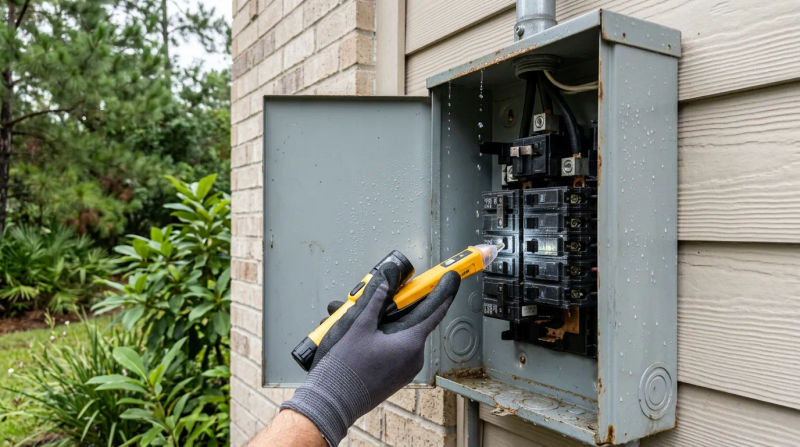
It’s a familiar scenario for many homeowners in Conroe. A heavy September storm rolls through overnight, one of those late-summer downpours that seems to drench everything. The next morning, you find that the outlets in your kitchen are dead, or the lights in the garage won’t turn on. A quick trip to the breaker panel reveals the culprit: a tripped circuit. You reset it, only to have it snap back off moments later. When a breaker keeps tripping after heavy rain, it’s more than just an inconvenience; it's your home’s electrical system sending a clear signal that something is wrong.
Here in the Conroe area, the combination of intense rainfall, lingering humidity from hurricane remnants, and the increased demand on our air conditioning systems creates a perfect storm for electrical issues. Moisture is the natural enemy of electricity, and when it finds its way into vulnerable parts of your wiring, your breaker panel does its job by shutting down the circuit to prevent a more dangerous situation. Understanding the signs and causes is the first step toward a safe and reliable solution.
Common Signs and Symptoms
While a tripped breaker is the most obvious indicator, other subtle signs can point to a moisture-related electrical problem. Our technicians are trained to look for a pattern of symptoms during a diagnostic visit. You should be on the lookout for:
- A Repeatedly Tripping Breaker: This is the primary symptom. If the same circuit trips every time it rains and resists being reset, moisture is the most likely cause.
- GFCI Outlets That Won’t Reset: Ground Fault Circuit Interrupter (GFCI) outlets, those with the “TEST” and “RESET” buttons, are required in wet-prone areas like kitchens, bathrooms, garages, and outdoor spaces. If a GFCI trips after rain Conroe and won’t reset, it’s detecting a ground fault, likely caused by water infiltration somewhere on the circuit.
- Visible Moisture in Outdoor Fixtures: Take a look at your exterior outlets, landscape lighting, and porch light fixtures. Do you see condensation, water droplets, or fogging behind the plastic or glass covers? This is a clear sign that the protective seals have failed.
- Buzzing or Sizzling Sounds: Any audible buzzing, sizzling, or humming from an outlet, switch, or the breaker panel itself is a serious red flag. This can indicate that electricity is arcing due to contact with water, which is an immediate fire hazard.
- A Burning Smell: A faint acrid or fishy smell near an electrical component often points to overheating plastic or wiring insulation. If you notice this, especially after resetting a breaker, shut the breaker off immediately.
- Flickering or Dimming Lights: If lights on a particular circuit flicker or dim during or after a rainstorm, it can suggest an unstable connection or a partial short circuit caused by moisture.
What Causes This Problem
From my decade of experience in the field, I can tell you that water is incredibly persistent. It can exploit the smallest weakness in your home's exterior to compromise your electrical system. Here are the most common culprits our technicians find during a Conroe electrical inspection.
- Degraded Outdoor Outlet Covers: Many homes in the Conroe area, particularly the large suburban properties built in the 1990s and 2000s, were fitted with standard plastic outlet covers. Years of exposure to the Texas sun can make these covers brittle and cracked. They lose their seal, allowing wind-driven rain to get directly into the outlet box, leading to a short circuit.
- Compromised Underground Conduit: Wiring for landscape lighting, pool equipment, or detached garages is often run through PVC or metal conduit buried underground. Over time, shifting soil, accidental shovel strikes, or simple degradation can cause this conduit to crack or separate at the joints. This allows groundwater to flood the conduit and saturate the wiring within.
- Water Infiltration at the Service Entrance: The point where the main electrical service lines from the utility pole attach to your house is called the service entrance or weatherhead. If the seals here are old or damaged, rainwater can travel down the cables and into your meter base or, in a worst-case scenario, directly into your main breaker panel. The complex, multi-gabled rooflines common on homes from the 1990s-2000s era can sometimes channel large volumes of water toward the service mast, overwhelming aging seals.
- Leaking Roofs or Walls: A leak doesn't have to be directly over an outlet to cause a problem. Water can seep into your attic or wall cavities and run along framing, pipes, or cables before dripping onto a junction box or section of wiring far from the initial entry point. This creates a hidden and particularly tricky short circuit to diagnose.
- Failing or Worn-Out Breakers: While less common, the circuit breaker itself can fail. It may become weak with age and trip at a lower amperage than it's rated for (a nuisance trip), or it can become damaged by moisture that has entered the panel. The high electrical load from A/C units running constantly during humid weather can stress a weak breaker, making it more susceptible to tripping from a minor fault.
When to Call a Professional
Knowing when to tackle a problem yourself and when to call for expert help is crucial, especially when it comes to electricity. Issues involving moisture require extreme caution, and wet outlet safety Conroe should be your top priority.
It might be tempting to simply keep resetting the breaker, hoping the problem resolves itself as things dry out. This is a risky approach. Each time the breaker trips, it's a warning that a fault condition exists. Repeatedly forcing power through a compromised circuit can lead to escalating damage, arcing, and a significant risk of fire.
You should call a qualified professional immediately if you experience any of the following:
- The breaker trips instantly every time you try to reset it.
- You see scorch marks or smell anything burning.
- You hear any buzzing or sizzling sounds from outlets or the panel.
- More than one circuit is affected, or your main breaker is tripping.
- You are in any way uncertain about the cause of the problem or how to safely address it.
When our technicians arrive, we perform a systematic diagnostic process. We don’t just flip the breaker; we identify the root cause. Using specialized equipment like multimeters and megohmmeters, we can test the circuit's integrity and pinpoint the exact location of the ground fault caused by moisture. From there, we can perform the correct repair, whether it's replacing a faulty outdoor outlet with a modern, weatherproof “in-use” cover, repairing a damaged underground line, or sealing a water entry point at the service panel.
Conclusion
That constantly tripping breaker after a Conroe downpour is your home's safety system working as designed, but it's also a clear call to action. The issue is almost always caused by moisture infiltrating your electrical system through a compromised cover, conduit, or seal. While a GFCI tripping is a good sign that its safety feature is working, it doesn't solve the underlying water problem.
Don't ignore these warnings. Electrical faults caused by water are not only inconvenient but also pose a genuine safety risk to your property and family. Acting early to diagnose and repair the source of the moisture can prevent more extensive damage and ensure your electrical system remains safe and reliable, no matter what the Texas weather throws at it.
If you notice any of these signs, contact a local electrical professional for an inspection.