
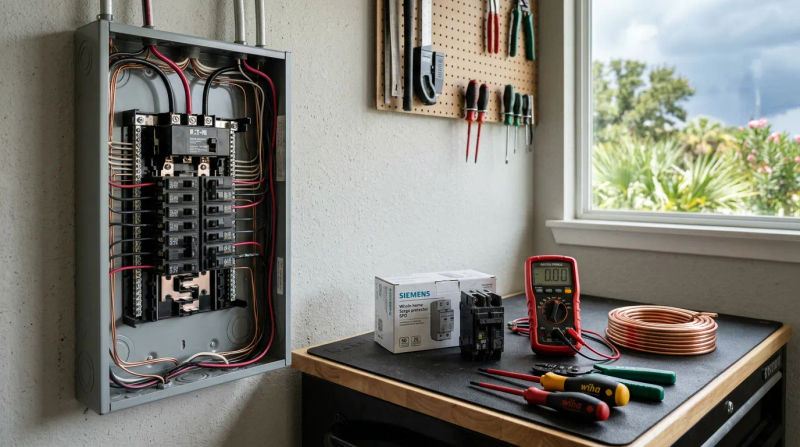
As a Lead Communications Systems Technician with over a decade of experience in the Houston area, I know that for homeowners, any electrical project begins with one primary question: "What is this going to cost?" It's a practical and important concern, and when it comes to protecting your home's valuable electronics, you deserve a transparent answer. This guide is designed to provide clear, realistic information about the surge protector cost in our area, helping you budget wisely for this crucial home upgrade.
Here in Texas City, we're no strangers to volatile weather. The threat of coastal storms and hurricane remnants is a constant reminder of our vulnerability to power fluctuations. But it’s not just the big storms; even routine utility grid switching can create small, damaging surges. These events can silently degrade or instantly destroy sensitive electronics, from your HVAC system's control board and smart appliances to your computers and entertainment systems. A whole-home surge protector is your first and best line of defense, and understanding the investment is the first step toward securing that peace of mind.
Average Costs in Texas City
When budgeting for a whole-home surge protector, it's helpful to think in terms of a range rather than a single fixed price. The total investment includes both the protective device itself and the professional labor required for a safe and effective installation. Based on what our technicians see in the field, here’s a realistic breakdown of Texas City whole-home surge protection pricing for 2026.
- Standard Professional Installation: For a typical home, you can generally expect the cost to range from $450 to $900. This price usually covers a high-quality, Type 2 surge protective device (SPD) with an appropriate kA rating for most residential needs, along with the labor for a licensed technician to install it correctly inside or next to your main electrical panel.
- High-Performance or Complex Installation: Costs can range from $900 to $1,500+ in certain situations. This higher range might apply if you require a device with a very high kA rating (for a large home with extensive high-end electronics), need a Type 1 device installed at the meter, or if your electrical panel requires modification to accommodate the new device.
These prices are estimates. The final cost will depend on the specific factors of your home's electrical system, which is why a detailed, on-site assessment is always the best course of action. During peak hurricane season, it's wise to get an itemized estimate based on your panel type, amperage, and desired protection level before an electrical event occurs.
Factors That Affect Price
The price range above is broad because several key variables influence the final quote. Understanding these factors will help you decipher any electrician estimate surge device Texas City you receive.
- The Surge Protector Device (SPD) Itself: The hardware accounts for a significant portion of the cost. The primary differentiator is its kiloamp (kA) rating. This number indicates the maximum amount of surge current the device can absorb in a single event. A higher kA rating means more robust protection.
- Good (40-80 kA): Suitable for smaller homes with standard electronics.
- Better (80-120 kA): The sweet spot for most single-family homes in our area, offering excellent protection for modern electronics and HVAC systems.
- Best (120+ kA): Recommended for very large homes, homes with sensitive commercial-grade equipment, or those in high-risk lightning areas.
- Your Home's Electrical Panel: This is often the biggest variable I see on job sites. A straightforward panel surge protector installation Texas City takes our trained crews about one to two hours. However, complexities with the panel can add time and cost. Many homes in Texas City, particularly the classic 1950s Ranch-style houses, have older electrical panels. These panels might be:
- Full: If there are no empty breaker slots, a technician may need to install tandem breakers (if the panel allows) or, in some cases, a small sub-panel to create the necessary space. This adds labor and material costs.
- Outdated: Some panels from that era may not be compatible with modern SPDs or may be brands that are difficult to source parts for, potentially requiring more creative solutions from an experienced technician.
- Inaccessible: A panel located in a tight closet or behind permanent shelving can make the installation more time-consuming.
- Type of Installation (Type 1 vs. Type 2):
- Type 2 SPDs are the most common for residential retrofits. They are installed on the load side of the main breaker, directly connected to a two-pole breaker within your panel. This is the standard installation included in most quotes.
- Type 1 SPDs are installed on the line side of your main breaker, often at the electric meter. This provides protection from external surges before they even enter your panel. This installation is more complex, often requires coordination with the utility company, and carries a higher labor cost.
- Labor and Company Quality: The quality of the installation is just as important as the quality of the device. A properly installed SPD is a critical safety component. When you hire a professional company, you're paying for expertise, including:
- Licensed and Insured Technicians: This protects you from liability and ensures the work is done to code.
- Correct Wiring: The effectiveness of an SPD is highly dependent on the length and gauge of the wires used to connect it. Our technicians follow standardized processes to keep wires as short and straight as possible, maximizing protection.
- Warranty: Reputable installers will offer a warranty on their workmanship in addition to the manufacturer's warranty on the device.
How to Get the Best Value
Getting the best value doesn't mean finding the cheapest price. It means getting the right level of protection for your home, installed correctly, for a fair price.
- Focus on the Right kA Rating: Don't overpay for a massive kA rating you don't need, but don't skimp and leave your expensive electronics underprotected. A qualified technician can assess your home's size and electronic load to recommend the optimal rating.
- Bundle the Work: If you're already planning other electrical work, like adding an EV charger, upgrading a panel, or running a new circuit, adding a whole-home surge protector at the same time can save on labor costs, as the technician is already on-site and working in your panel.
- Consider Layered Protection: A whole-home unit is your primary defense, but using quality point-of-use surge protectors (the familiar power strips) for sensitive electronics like your computer and TV adds a valuable second layer of defense against smaller, internal power fluctuations.
Questions to Ask Your Contractor
To ensure you're making an informed decision, here are some essential questions to ask any contractor providing an estimate:
- What kA rating do you recommend for my home, and why?
- Will you be installing a Type 1 or Type 2 device?
- Does my electrical panel have enough space, or will it require modifications?
- Is your quote all-inclusive, covering the device, labor, and any extra materials like breakers?
- What is the manufacturer's warranty on the device, and what is your warranty on the installation workmanship?
- Can you provide proof of licensing and insurance?
Answering these questions confidently is the mark of a professional and reliable electrical contractor.
Protecting your home from power surges is a proactive investment in preserving the technology you rely on every day. While the initial surge protector cost can vary, understanding what drives that price allows you to budget effectively and choose a solution that provides lasting security and peace of mind, especially in a place like Texas City. A small investment now can prevent thousands of dollars in replacement costs for fried appliances and electronics later.
For a personalized estimate tailored to your home's specific needs, contact our team at Rcoms for a free consultation. We can provide a detailed electrician estimate surge device Texas City homeowners can trust.