
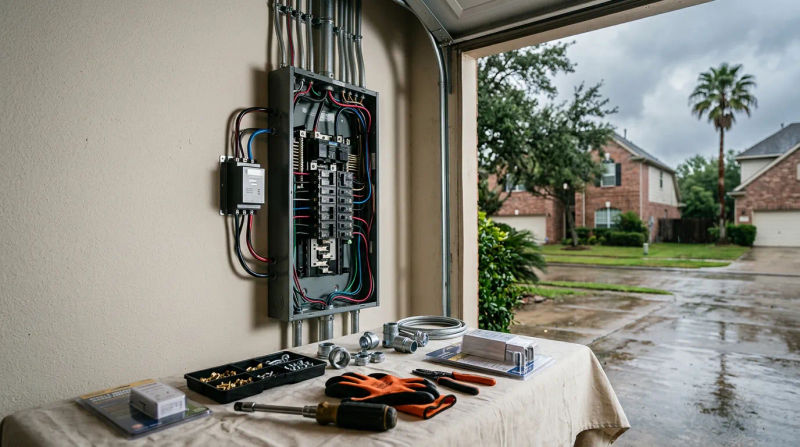
As a Lead Communications Systems Technician with over a decade of experience in the Houston area, I know that when homeowners start thinking about electrical upgrades, the first question is always about cost. It’s a practical and important concern. You want to protect your home and your budget simultaneously. This guide is designed to give you a transparent, no-nonsense look at what goes into the cost of whole-home surge protection, so you can make an informed decision for your family.
Here in Houston, this conversation becomes especially relevant as we head into September. The remnants of hurricane season and the potential for heavy rain and lightning bring a higher risk of power surges and utility fluctuations. These events can wreak havoc on the sensitive electronics in your home - from your HVAC system's control board and smart TV to your computers and kitchen appliances. A whole-home surge protector is your first line of defense, and understanding the investment is the first step.
Average Costs in Houston
Let's get straight to the point. For a professional whole-home surge protector installation in Houston, homeowners can typically expect the cost to range from $450 to $950. This price includes both the protective device itself and the labor from a licensed electrician.
This range generally covers the installation of a Type 2 surge protector, which is the standard device installed directly at your main electrical panel. It's designed to stop external surges, like those from lightning strikes or utility grid switching, from ever entering your home's wiring.
What does a "standard" installation involve? Our technicians follow a standardized process:
- Assessment: A quick evaluation of your main electrical panel to ensure there is physical space and capacity.
- Installation: Mounting the surge protector device adjacent to or inside the panel.
- Connection: Wiring the device to a dedicated two-pole circuit breaker.
- Verification: Testing the connections and ensuring the device's indicator lights show it is active and protecting your home.
This process is usually completed in one to two hours by a trained professional. The final price within that range depends on several factors, which we'll explore next.
Factors That Affect Price
The final panel surge protection pricing isn't a one-size-fits-all number. Several key variables can shift the cost up or down. From my experience on jobsites across the region, these are the most common factors.
1. The Surge Protector Device Itself The hardware is a significant part of the total surge protector cost. Devices are not all created equal, and the primary differences are:
- Surge Current Capacity (kA Rating): This measures how much electrical current the device can divert before failing. A higher kA rating (e.g., 80kA vs. 40kA) offers more robust protection and a longer service life, but also comes at a higher price. For most homes in Houston, a device in the 40kA to 80kA range is sufficient.
- Brand and Warranty: Reputable brands often come with better warranties, not just for the device itself but also for connected equipment. This peace of mind is factored into the price.
- Features: Some models include enhanced LED diagnostics, audible alarms for when the device needs replacement, or better filtering for electrical "noise."
2. Your Home's Electrical System This is where we see the most variation from one house to the next. The age and layout of your home's electrical panel are critical.
- Panel Space: A Type 2 surge protector requires a dedicated 240-volt circuit breaker. If your panel is already full, our technician will need to make space. This might involve installing smaller "tandem" breakers or, in more complex cases, adding a small sub-panel. This additional labor and material will increase the cost.
- Panel Age and Condition: In the Houston area, we work in many homes built in the 1990s and 2000s, particularly in neighborhoods like Sugar Land. While these panels are generally modern, some brands from that era are now known to have issues or are difficult to find compatible breakers for. An older panel from the 70s or 80s might have corrosion or code compliance issues that must be addressed before a surge protector can be safely installed.
- Sub-Panels: Many of the larger, neo-eclectic homes from the 90s and 00s have sub-panels to service a second story, a detached garage, or a large addition. For comprehensive protection, it's best practice to install a surge protector at each sub-panel as well, which would add to the overall project cost.
3. Labor and Professional Expertise While it might be tempting to find the cheapest installer, proper installation is non-negotiable. An improperly installed surge protector offers zero protection and can even be a fire hazard. When you hire a professional company, you're paying for:
- A Licensed Electrician: This ensures the work is done safely and to National Electrical Code (NEC) standards.
- Efficiency and Reliability: Our crews have standardized workflows. We arrive with the right tools and parts, perform the installation efficiently, and clean up the workspace. This organized approach minimizes disruption to your day.
- Insurance and Guarantees: A professional company carries liability and workers' compensation insurance. We also stand behind our work with a workmanship warranty.
How to Get the Best Value
Getting the best value isn't just about finding the lowest price; it's about getting the most effective and reliable protection for your investment. Here are a few tips:
- Don't Overbuy on kA Rating: While more is better, there's a point of diminishing returns. Ask your technician to explain why they are recommending a specific kA rating for your home. You don't need a commercial-grade unit for a typical residence.
- Bundle the Service: If you're already having other electrical work done, like adding an outlet or upgrading a light fixture, ask about bundling the surge protector installation. Since the electrician is already on-site, you can often save on trip fees or labor minimums.
- Focus on a Layered Approach: The best protection combines a whole-home unit at the panel with high-quality, point-of-use surge protectors for sensitive electronics like your computer and entertainment center. The whole-home unit handles large external surges, while the smaller strips handle small internal surges and provide an extra buffer.
- Prioritize Professional Installation: The value of a surge protector is completely negated by improper installation. The peace of mind that comes from knowing it was installed correctly by a qualified professional is the most important value you can get.
Questions to Ask Your Contractor
To ensure you're hiring a competent professional and getting a fair price, be prepared to ask a few questions. A reputable contractor will be happy to provide clear answers.
- Are you a licensed and insured electrical contractor in Texas?
- What kA rating and brand of surge protector do you recommend for my home, and why?
- Does your estimate include all necessary materials and labor, including any potential adjustments to my panel?
- What is the warranty on the device itself, and what is your warranty on the installation workmanship?
- Will you provide a written, itemized quote before work begins?
Asking these questions helps you compare apples to apples when looking at different Type 2 surge protector cost Texas estimates and ensures there are no surprises on the final bill.
Protecting your home's electronics from Houston's unpredictable weather and power grid events is a smart, proactive investment. While the upfront cost is a factor, it's minor compared to the potential cost of replacing an HVAC system, a refrigerator, and multiple TVs all at once. By understanding the factors that influence price and knowing what to ask, you can confidently budget for this essential home protection.
For a personalized estimate for whole-home surge protector installation in Houston, contact Rcoms for a free consultation. Our team can assess your specific needs and provide a clear, written quote.