
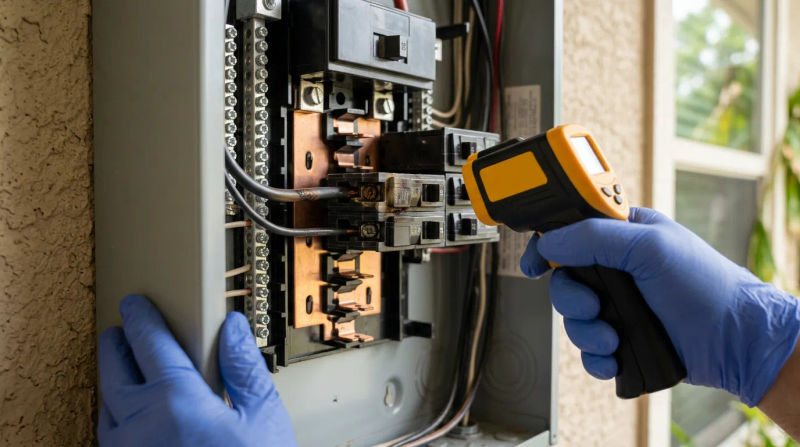
It’s a familiar scenario for many Houston homeowners in late September. The air conditioning has been battling the relentless heat and humidity for months, your family is home using various devices, and suddenly - the lights flicker and a section of your house goes dark. A quick trip to the garage or utility closet reveals a tripped breaker. While a one-off trip is usually no cause for alarm, if it becomes a regular occurrence, it could be a sign that your home's electrical system is under serious strain. As a lead technician with over a decade of experience on jobsites across the Houston area, I've seen firsthand how our long, demanding cooling season can expose weaknesses in a home's electrical panel.
Your breaker panel is the heart of your home's electrical system, distributing power safely to every outlet, switch, and appliance. When it's working correctly, you barely notice it's there. But when it's struggling, it will give you warning signs. Ignoring them can lead to more significant problems, from inconvenient power outages to serious safety hazards.
Common Signs and Symptoms
Our trained crews follow a standardized diagnostic process, and it always begins with observing the symptoms. Here are the most common signs of a breaker panel overload that you should be aware of, especially as we close out another intense Texas summer.
- Frequent Breaker Trips: This is the most obvious symptom. A circuit breaker is a safety device designed to shut off power when a circuit draws too much current. If you find the Houston breaker keeps tripping for your kitchen or living room, it's a clear indication that the circuit is regularly being pushed beyond its capacity. This is common when high-draw appliances like an air conditioner, microwave, and hair dryer are running simultaneously.
- Dimming or Flickering Lights: Have you ever noticed the lights dim for a moment when your central AC unit kicks on? This is caused by the large inrush of current the compressor motor needs to start. While a minor, momentary dimming can be normal, frequent or significant flickering and dimming suggests the circuit is overloaded and struggling to supply consistent voltage.
- A Burning Odor: This is a critical warning sign that requires immediate attention. If you notice a hot circuit breaker smell, often described as acrid, fishy, or like burning plastic, coming from your panel, it indicates that components are overheating to a dangerous degree. The plastic insulation on wires or the body of the breaker itself may be melting. This is a fire hazard.
- An Electrical Panel Buzzing Sound: A properly functioning panel should be nearly silent. An audible electrical panel buzzing sound or a sizzling noise is a major red flag. This sound is often caused by a loose wire that is arcing - meaning electricity is jumping across a small gap - or a circuit breaker that is failing internally. Both are serious issues.
- Panel Cover is Hot to the Touch: It's normal for a breaker panel to feel slightly warm, especially when under a heavy load from the air conditioner. However, if the panel cover or any individual breaker feels genuinely hot to the touch, it's a sign of a problem. Excessive heat is generated by loose connections or a severe overload, and it can degrade components over time.
- Scorch Marks or Discoloration: A visual inspection can reveal a lot. Look for any signs of soot, browning, or melted plastic on or around the breakers themselves, or on the panel cover. This is physical evidence of past or ongoing overheating and arcing events.
- Over-Reliance on Power Strips: While not a symptom of the panel itself, how you use electricity in your home is a good indicator of your system's capacity. If you have power strips and extension cords daisy-chained together to run computers, entertainment systems, and kitchen appliances, it's a sign that your home's built-in wiring is inadequate for your needs, inevitably leading to overloaded circuits.
What Causes This Problem
Understanding the root cause is key to finding the right solution. In our experience, panel problems usually stem from a few key issues, many of which are common in homes of a certain age.
Many Houston neighborhoods, such as Liberty, feature a significant number of single-story Ranch-style homes built in the 1970s. These homes were well-built for their time, but their electrical systems were designed for a much simpler era. They were equipped to handle a refrigerator, an oven, and perhaps a single television. They were not designed for the demands of modern life: multiple large-screen TVs, computers for every family member, smart home devices, and most importantly, powerful central air conditioning systems that run for a significant portion of the year.
This mismatch between an older system's capacity and modern electrical loads is the primary driver of a breaker panel overload. Other specific causes our technicians frequently identify include:
- Worn-Out Breakers: Circuit breakers are mechanical devices with moving parts and springs. After decades of service, especially in Houston's humid climate which can accelerate corrosion, they can weaken. A weak breaker might trip even when the circuit isn't truly overloaded, while a dangerously faulty one might fail to trip at all.
- Loose Connections: Heat and vibration can cause the terminal screws that hold wires in place to loosen over time. A loose connection creates high electrical resistance, which in turn generates intense heat. This is a leading cause of that hot circuit breaker smell and is a significant fire risk that requires professional tightening (re-torquing).
- Unbalanced Loads: In a properly configured panel, electrical loads are distributed evenly across the two main