
You step into your home after a long day, expecting a cool blast of air to offer relief from the lingering Houston humidity. Instead, the air feels thick and stagnant. Or perhaps you're in the attic retrieving holiday decorations and notice a damp spot on the drywall, or worse, a puddle of water in the drain pan under your air handler. These are scenarios our technicians see frequently, especially as we head into September. After a long, brutal summer of non-stop operation, your air conditioner's hardest working, yet most overlooked, component can finally decide it has had enough: the condensate drain line.
Here in the Houston area, our air conditioners are tasked with removing an incredible amount of moisture from the air. All that water has to go somewhere. A clog in the AC drain line can quickly lead to water backing up, causing system shutdowns and potentially thousands of dollars in water damage. Understanding the warning signs is the first step in preventing a minor issue from becoming a major headache.
Common Signs and Symptoms
Recognizing the early signals of a blockage is crucial. Our field technicians are trained to spot these tell-tale signs during routine maintenance, but every homeowner should be aware of what to look for. Here are the most common clogged condensate line signs we encounter.
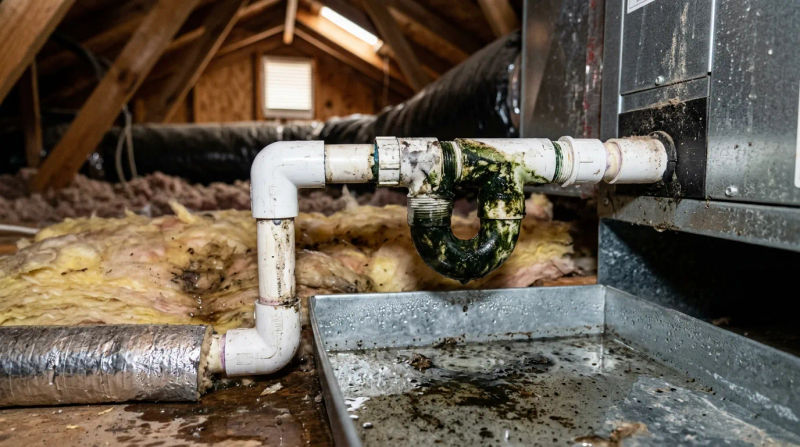
- Water Puddles or Stains: This is the most obvious and alarming sign. You might find a puddle of water on the floor around your indoor air handler (often located in a closet, garage, or attic). For many homes in areas like Pearland, built in the 1990s and 2000s, the air handler is in the attic. A leak here can saturate insulation and stain, or even collapse, the ceiling below. If you're experiencing a Houston AC leaking water September surprise, a clogged drain is the likely culprit.
- A Full or Overflowing Drain Pan: Your AC unit has a primary drain pan and a secondary, or emergency, pan beneath it. If you see standing water in this secondary pan, it means the primary drain is blocked and water is already being diverted. This is your system's last line of defense before a damaging overflow.
- Your AC System Shuts Off Repeatedly: If your AC suddenly stops working on a hot day, don't assume the worst just yet. Many modern systems are equipped with a safety device called a condensate overflow switch, or AC float switch. When water in the drain pan rises to a dangerous level, this switch is triggered, shutting off the entire system to prevent water damage. While it's doing its job, it's a clear indicator of a drainage problem.
- Musty or Moldy Odors: A persistent, dirty-sock-like smell coming from your vents when the AC kicks on is a strong clue. This odor is caused by standing water and the growth of mold and mildew inside the dark, damp drain line or on the evaporator coils.
- Visible Algae or Slime: If you can inspect the end of your condensate drain pipe where it exits your home (usually a white PVC pipe near the foundation or coming from the soffit), look for visible signs of algae, slime, or constant dripping even when the system isn't running hard. This indicates a significant biological growth issue within the line.
- Gurgling or Bubbling Sounds: When your system is running, you might hear unusual gurgling noises coming from the indoor unit. This sound is often caused by water struggling to get past a partial clog in the drain line.
- Reduced Cooling and High Indoor Humidity: A backed-up condensate line can cause humidity levels to rise inside your home. The system can't effectively remove moisture from the air if it has nowhere to drain it. This can make your home feel sticky and uncomfortable, even if the AC is running constantly.
What Causes This Problem
Understanding why your AC drain line clogs is key to preventing it. In a high-humidity environment like Houston, the cause is almost always a combination of environmental factors and immense workload.
Your air conditioner doesn't just cool the air; it dehumidifies it. It does this by passing warm, moist indoor air over a cold evaporator coil. Condensation forms on the coil, just like on a cold glass of iced tea. This water drips into a collection pan and is channeled out of your home through the condensate drain line. On a typical humid Houston day, your system can produce between 5 and 20 gallons of water.
The main cause of clogs is the formation of algae, mold, and bacterial slime. The drain line is a dark, damp, and nutrient-rich environment - a perfect incubator. Over time, this biological growth forms a thick, gelatinous sludge that traps debris and eventually chokes off the line completely. This process is accelerated during the late summer months like August and September after the system has been running almost continuously for months.
Other contributing factors include:
- Dirt, Dust, and Debris: Air filters can't catch everything. Dust, insulation fibers, and other airborne particulates can get pulled into the system, mix with the condensate, and contribute to the sludge.
- Improper Installation: If the drain line wasn't installed with the correct downward slope, water can sit in low spots, promoting growth and making clogs more likely. This is something our technicians sometimes find in homes built during periods of rapid construction.
- Air Leaks or Traps: An un-trapped or improperly vented drain line can pull in outside air, which contains spores and bacteria that accelerate slime growth.
When to Call a Professional
For minor, early-stage clogs, some homeowners may attempt a DIY flush with vinegar or use a wet/dry vacuum at the outside drain termination. However, this often provides only temporary relief and may not address the full scope of the problem.
You should call for professional service if:
- Your system has shut down. This points to the AC float switch shutting off the unit, indicating a significant backup that needs to be resolved safely.
- You see evidence of water damage. Once water has escaped the drain pan, the priority is to stop the leak immediately to prevent further damage to ceilings, walls, and floors.
- You are not comfortable working on your HVAC system. This is especially true for units in hot, cramped attics. Our technicians have the proper training and safety equipment to work in these environments.
- Your DIY attempts have failed. If a simple flush doesn't clear the line, the clog is likely severe and requires specialized tools.
When you call an experienced professional, the process is thorough. Our technicians utilize a standardized workflow to ensure reliability. We don't just clear the blockage; we diagnose the root cause. This involves using high-pressure nitrogen or specialized vacuums to forcefully and completely clean the entire length of the AC drain line. We also inspect the drain pan, check the function of the float switch, and can apply algaecide tablets or recommend system modifications to help prevent future clogs.
Conclusion
After a long Houston summer, your air conditioner has worked tirelessly. The appearance of a clogged drain line in September is a common result of that hard work combined with our region's intense humidity. By learning to recognize the signs - from a puddle on the floor to a musty smell in the air - you can catch the problem early.
Ignoring these symptoms can lead to an inconvenient system shutdown at best, and severe, costly water damage at worst. Don't wait for a small issue to escalate. Proactive inspection and maintenance are far less stressful and expensive than emergency repairs.
If you notice any of these signs, contact a local Electrical HVAC professional for an inspection. A trained expert has the right tools and expertise to safely clear the clog, clean the system, and ensure your home stays cool and dry.